
Categories
Buyer's GuidePublished August 27, 2026
The Real Cost of Buying a Home in Minnesota: What No One Tells You

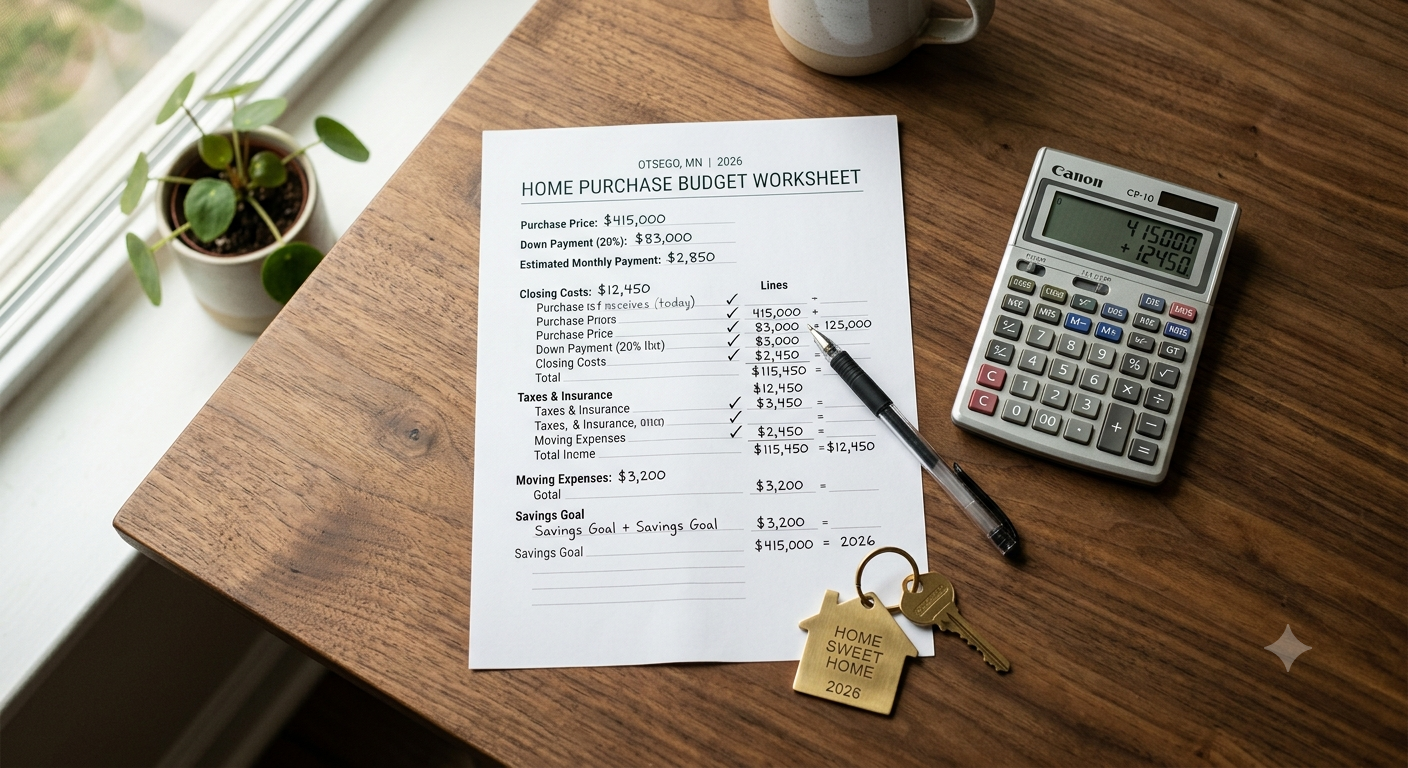
You've saved for a down payment. You've been pre-approved. You think you know what buying a home in Minnesota is going to cost you. Then the closing disclosure lands in your inbox, and suddenly there's a list of fees you never budgeted for — and nobody warned you about them.
This happens to buyers across the north metro every week, from first-timers in Elk River to move-up buyers in Anoka. The purchase price is only part of the equation. If you're planning to buy a home in Minnesota this year, here's what the sticker price doesn't tell you — and how to budget for the real cost of buying a home in Minnesota from offer to move-in day.
The Down Payment Is Just the Starting Line
Most buyers know they need a down payment, but the amount varies more than people expect. Conventional loans can go as low as 3% down for qualified first-time buyers, while FHA loans typically require 3.5%. VA loans, available to eligible veterans and service members, often require no down payment at all.
The mistake many buyers make is assuming a bigger down payment is always the goal. In reality, the right number depends on your loan program, your monthly payment comfort level, and whether private mortgage insurance (PMI) makes sense for your situation. A local lender familiar with Sherburne, Wright, and Anoka County loan limits can walk you through the actual numbers for your target price range.
Closing Costs: The Line Item Nobody Explains
Closing costs are the fees paid to finalize your mortgage and transfer the property, and they typically run between 2% and 4% of the purchase price in Minnesota. That means on a $350,000 home, buyers should budget somewhere between $7,000 and $14,000 beyond the down payment.
These costs usually include:
- Loan origination and underwriting fees
- Appraisal and credit report fees
- Title insurance and title search fees
- Recording fees paid to the county
- Prepaid property taxes and homeowners insurance placed in escrow
Some of these costs can be negotiated into the seller's contribution as part of your offer, which is one reason working with an experienced local buyer's agent matters. In a competitive north metro market, knowing how much closing cost credit to ask for — without pricing yourself out of a deal — takes local market knowledge.
Property Taxes Vary More Than You'd Think
One detail that surprises buyers moving within the north metro: property tax rates aren't the same from one county to the next, or even from one city to the next within the same county. A home in Anoka may carry a different effective tax rate than a similar home in Zimmerman or Otsego, based on local levies, school district funding, and county assessments.
Minnesota's Homestead Credit can reduce the taxable value for owner-occupied primary residences, so it's worth confirming with your lender or the county assessor's office what your actual annual tax bill will look like before you fall in love with a listing.
Median Effective Tax Rate Across Minnesota 1.13%.
Median Annual Tax Bill Across Minnesota is $3,364.
Escrow, Insurance, and the Costs That Show Up Every Month
Your mortgage payment is rarely just principal and interest. Most lenders require an escrow account that collects a portion of your annual property taxes and homeowners insurance premium with every monthly payment. First-time buyers are often caught off guard when their estimated payment from a mortgage calculator turns out to be several hundred dollars lower than their actual monthly bill.
Homeowners insurance costs in Minnesota also reflect real regional factors — proximity to fire hydrants and stations, roof age and material, and even how far a property sits from a lake or wooded area. Getting an insurance quote early in your home search, not after your offer is accepted, helps you avoid a last-minute budget surprise.
The Costs After You Own the Home
The real cost of buying a home in Minnesota doesn't stop at the closing table. New homeowners should plan for:
- A home maintenance fund, generally 1% to 2% of the home's value annually
- HOA dues, if applicable, which are common in some newer Wright County and Sherburne County developments
- Utility setup and average monthly costs, which can run higher in older homes with less efficient heating systems
- Moving costs, which are easy to underestimate if you're relocating any real distance
None of these costs should scare you away from buying. They're simply part of a complete, honest budget — and a good agent will walk through all of them with you before you ever write an offer.

Buying with Your Eyes Open
Understanding the full cost of buying a home in Minnesota isn't about finding reasons to wait. It's about walking into your purchase with a clear, realistic picture so there are no surprises between your accepted offer and your first year as a homeowner. Buyers across Elk River, Zimmerman, Anoka, Ramsey, and Otsego who plan for the full cost picture — not just the purchase price — end up far more confident throughout the process.
If you're ready to see what buying a home actually looks like in your budget, our team can walk you through current loan programs, realistic closing cost estimates, and property tax expectations specific to the city you're considering. Reach out today, and let's put together a clear, honest number before you start touring homes.

Steven DeGreeff
Owner / Realtor® | Degreeff and Associates | Steven DeGreeff | Keller Williams Realty Integrity NW
or another way