
Categories
Buyer's Guide, Local Community & Growth, Market Trends & InsightsPublished August 20, 2026
Minnesota Property Taxes Explained: A North Metro Guide

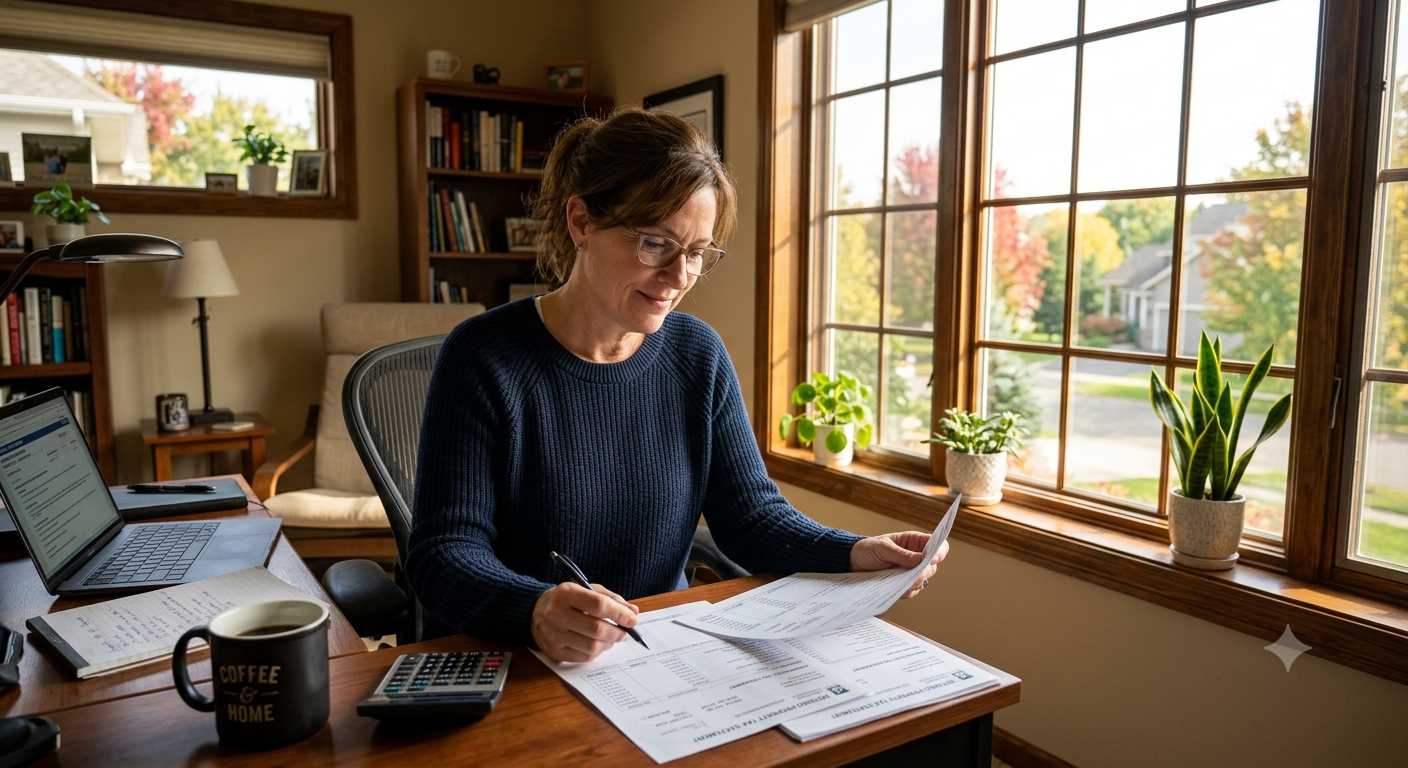
If you own a home in the north metro, you already know the property tax bill that shows up every spring can feel like a mystery. Between assessed values, homestead credits, and rates that shift from one county line to the next, it's easy to feel like you're guessing at what you actually owe and why. Understanding Minnesota property taxes in the north metro doesn't require an accounting degree, just a clear breakdown of how the system works and what it means for your household budget.
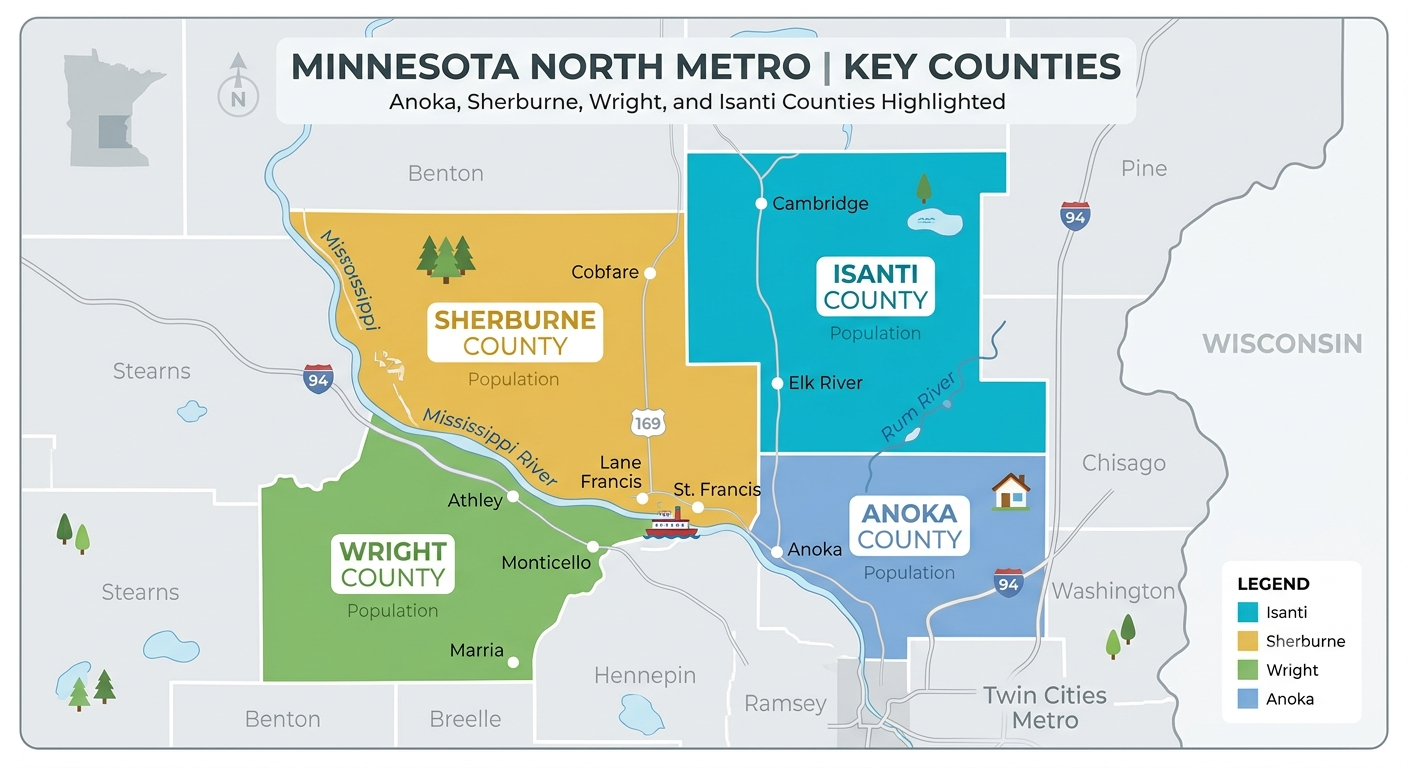
Whether you're a longtime homeowner in Anoka trying to make sense of this year's statement, or a buyer weighing a move to Sherburne, Wright, or Isanti County, knowing how these taxes are calculated helps you plan with confidence instead of surprise.
How Minnesota Calculates Your Property Tax
Every county assessor's office estimates the market value of homes in its jurisdiction each year, usually based on recent comparable sales. That estimated market value is the starting point, but it isn't what you're actually taxed on. Minnesota applies a classification rate to your home's value, then local taxing authorities, your county, city or township, school district, and any special districts, set levies that determine the final rate applied to that value.
In practice, this means two homes of similar size and age can have different tax bills depending on which city, county, or school district they sit in. A home in Elk River and a home just across the line in a different township may see noticeably different totals, even with comparable market values, because the layered levies aren't identical.
The Homestead Credit and Why It Matters
If you live in your home as your primary residence, Minnesota's homestead classification can meaningfully lower your taxable value compared to a non-homesteaded or investment property. To claim it, you'll need to file a homestead application with your county assessor's office after closing, most counties make this a simple form, but it's a step buyers sometimes forget in the rush of moving.
Missing the homestead classification is one of the more common oversights we see with new homeowners in the north metro. It's worth putting on your closing checklist, since the difference in your annual bill can be significant over time.
A quick post-closing checklist worth keeping handy:
- File your homestead application with the county assessor's office as soon as possible after closing
- Confirm the deadline for your specific county, they can vary
- Keep a copy of your closing documents on hand, most applications ask for basic ownership and occupancy details
- Watch for confirmation from the county that your homestead status has been applied
How Rates Compare Across Anoka, Sherburne, Wright, and Isanti Counties
Every county in our service area sets its own levy, and rates can vary from year to year based on local budgets, school funding needs, and voter-approved referendums. As a general pattern, more rural townships in Sherburne, Wright, and Isanti Counties often carry lower overall rates than more built-out areas closer to the metro core, while cities with strong school investment, like those in the Elk River Area or Buffalo-Hanover-Montrose districts, may carry a bit more in local levies to support those programs.
If you're comparing two towns as part of a home search, it's worth asking your agent to pull the specific tax history for any property you're considering rather than relying on countywide averages. Tax amounts are tied to the individual parcel, not just the county.
What Buyers Should Budget For
When you're calculating what a home will actually cost you each month, property taxes are just as important as your mortgage principal and interest. Most lenders roll your estimated annual property tax into your monthly escrow payment, so it's baked into your payment from day one. Ask your lender or agent for the most recent tax statement on any home you're seriously considering, this gives you a far more accurate monthly number than a rough estimate based on the sale price alone.
New construction buyers should pay particular attention here. A newly built home's first full-year tax bill is often based on the completed structure's assessed value, which can be noticeably higher than the land-only assessment used during the permitting phase. Ask your builder or agent what the projected post-construction tax bill will look like, not just the current one.
Property taxes are just one line item in the total cost of homeownership. If you haven't already, it's worth reading our breakdown of the real cost of buying a home in Minnesota, which covers closing costs, escrow, and other expenses that go beyond the purchase price.
What Sellers Should Know Too
If you're preparing to sell, your current tax statement is one of the first things serious buyers and their agents will review. A clear, accurate history builds buyer confidence, while unexplained jumps or unresolved assessments can raise questions during negotiations. If you've filed for any special classifications, such as agricultural or green acres status on a larger parcel, be prepared to explain how that may affect the buyer's future tax bill, since some classifications don't transfer automatically to a new owner.
Getting a Clearer Picture of Your Own Situation
Property taxes are one piece of the larger picture of what your home is truly worth and what it costs to own. If you're curious how your current assessment compares to your home's actual market value, or you're weighing a move to a different city or county in our service area, a professional look at the numbers is often more useful than trying to piece it together from county websites alone.
Our team works across Anoka, Sherburne, Wright, and Isanti Counties every day, and we're happy to walk you through what your specific tax situation looks like, whether you're staying put, buying, or getting ready to sell. Request a free home value estimate and we'll help you understand not just what your home is worth, but what it truly costs to own it in today's market.

Steven DeGreeff
Owner / Realtor® | Degreeff and Associates | Steven DeGreeff | Keller Williams Realty Integrity NW
or another way