
Categories
Buyer's Guide, Local Community & GrowthPublished August 13, 2026
What Does It Mean to Homestead Your Home in Minnesota?

What Does It Mean to Homestead Your Home in Minnesota?
If you're buying or already own a home in Anoka, Sherburne, Wright, or Isanti County, there's a simple form that could save you hundreds of dollars a year on property taxes — and a lot of homeowners never file it. It's called homestead classification, and it's one of the most overlooked steps after closing on a home.
Homesteading your home doesn't mean living off the grid or raising chickens in your backyard. In Minnesota real estate, it's a tax classification you apply for with your county assessor that tells the county, "I own this home, and I live here." That single distinction unlocks a lower property tax rate, a market value exclusion, and in some cases, additional credits that non-homesteaded properties simply don't qualify for.
Whether you just bought your first home in Elk River or you're weighing whether to sell a family property in Buffalo, understanding homestead classification helps you avoid overpaying on taxes and helps you plan more accurately for what a home will actually cost you to own.
How Homestead Classification Works
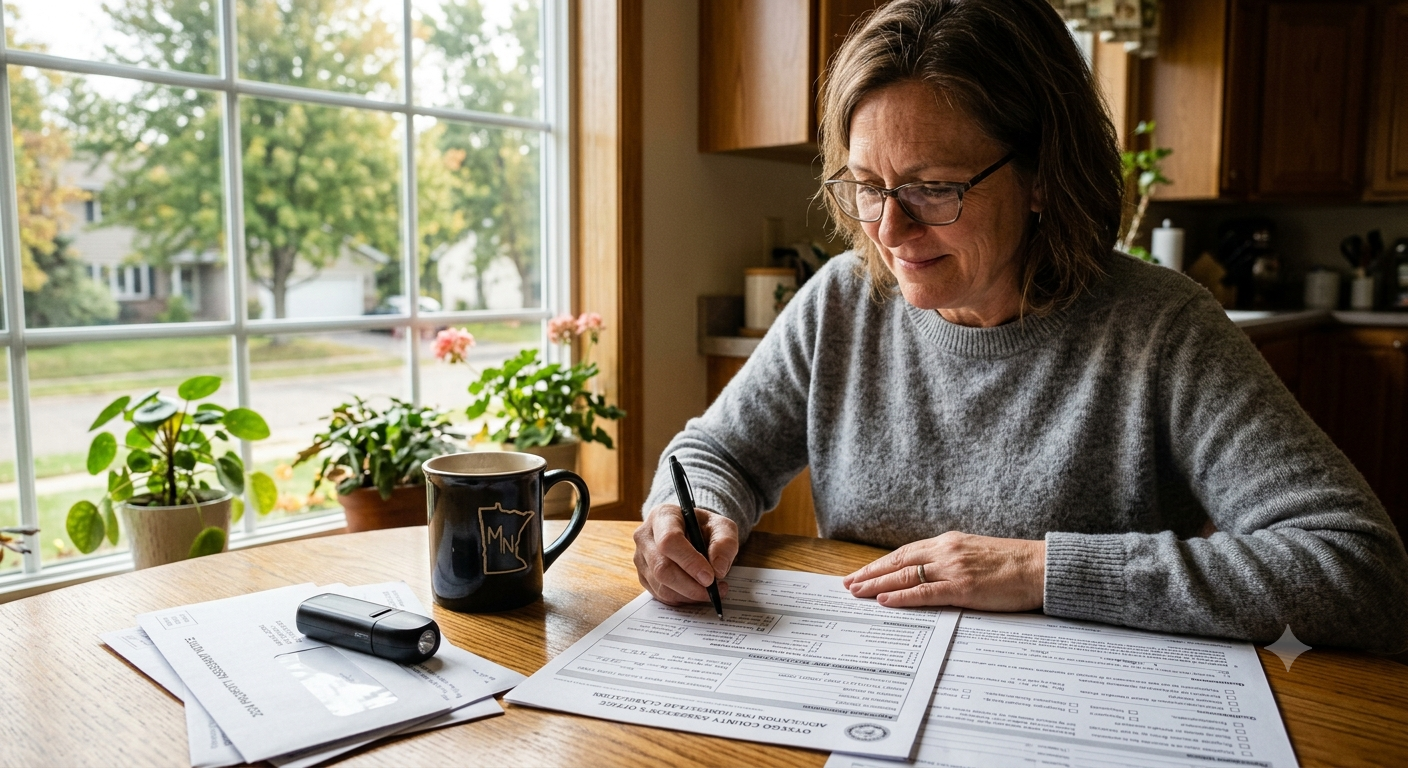
Homestead classification isn't automatic. Even though you own and live in your home, the county won't apply the lower tax rate unless you file an application with your county assessor's office. Buyers are sometimes surprised to find their first property tax statement reflects a higher, non-homesteaded rate simply because the classification hasn't been filed yet.
To qualify, you generally need to:
- Own the property, with your name on the deed (or hold it through a qualifying contract for deed)
- Occupy the home as your primary residence, not a rental or vacation property
- File the homestead application with your county assessor by December 31 to have it apply to the following year's taxes
Once your homestead classification is approved, you typically don't need to reapply each year. That said, counties can periodically ask you to reverify your eligibility, and you're required to notify the assessor within 30 days if you sell, move, or your occupancy status changes. It's also worth knowing that a married couple can only claim one homestead across the entire state, so this matters if you or your spouse still own property elsewhere.
The Different Types of Homestead Classification
Not every homesteaded property looks the same, and the type that applies to you depends on how you own and use the home.
Residential Homestead is the most common classification, covering owner-occupied homes throughout the north metro. It comes with a lower tax rate and a homestead credit that shows up directly on your property tax statement.
Relative Homestead applies when you own a home but a qualifying relative — a parent, child, grandparent, grandchild, sibling, or spouse — lives there instead of you. This comes up often in our area when parents buy a starter home for an adult child, or adult children purchase a home for aging parents closer to family. The tradeoff is that relative homesteads don't qualify for a property tax refund, so it's worth weighing before you file.
Agricultural Homestead is relevant to the acreage and hobby farm properties common in rural Sherburne and Wright County. If you own and occupy farm property, the house, garage, and first acre are taxed at the standard residential rate, while the remaining agricultural land is taxed at a lower rate. Some adjacent land, like sloughs or wooded windbreaks, can also be included if it's impractical for the assessor to value it separately.
Trust-Held Homestead applies to property held in a trust, as long as the trust's grantor or a qualifying relative of the grantor lives there. This is common for families doing estate planning while one generation still occupies the home.
Programs That Layer on Top of Homestead
Once your property is homesteaded, a few additional programs can reduce your tax bill further. The Homestead Market Value Exclusion shaves a portion of your home's market value off before taxes are calculated, which tends to benefit lower and mid-value homes the most. Rural property owners may also qualify for Green Acres, which defers tax increases tied to development pressure on agricultural land, or Rural Preserve, which is designed for rural properties that don't meet traditional farm income requirements but are still rural in character — think hobby farms and larger wooded lots outside Zimmerman or Big Lake. Qualifying disabled veterans can also access an additional market value exclusion on top of their homestead classification.
Why This Matters When You're Buying or Selling
For buyers, filing your homestead application should be near the top of your post-closing checklist. It's a simple form, but skipping it means paying a higher, non-homesteaded tax rate until you catch it. For sellers, homestead status can also factor into how a buyer estimates their carrying costs, since a non-homesteaded rate on the same property can be noticeably higher than what a homesteaded owner pays.
If you're weighing a purchase in Elk River, Zimmerman, Anoka, Buffalo, or anywhere else in our service area, understanding how homestead classification affects your tax picture is part of making an accurate, informed decision — not an afterthought for after you move in.
Get a Clear Picture of What a Home Will Actually Cost You
Property taxes are one of the biggest ongoing costs of homeownership, and homestead classification is one of the easiest ways to make sure you're not overpaying. If you're curious what your current home's classification status is, or want a clearer picture of what a home in the north metro will really cost you to own, get a free home value estimate from our team. We'll walk you through what your specific property qualifies for and make sure nothing gets left on the table.

Steven DeGreeff
Owner / Realtor® | Degreeff and Associates | Steven DeGreeff | Keller Williams Realty Integrity NW
or another way