
Published May 19, 2026
Are Home Prices Going to Fall?

Are Home Prices Going to Fall?
It is one of the most common questions keeping prospective buyers up at night: "If I buy a home right now, am I going to lose money if the market crashes tomorrow?"
With everything in the news, it is entirely understandable to feel hesitant. No one wants to make the biggest financial decision of their life at the wrong time. However, if you are waiting for a dramatic real estate crash to score a deep-discount property, housing data shows that a major price drop is highly unlikely.
The short answer is no, national home prices are not projected to fall in 2026. Instead, the real estate market is transitioning from years of frantic, unsustainable growth into a period of healthy stability.
The structural forces shaping today's housing market explain why home values are holding firm and what these trends mean for your next move.
The 2026 Forecast: Cooling, Not Collapsing
During the height of the pandemic housing boom, double-digit price increases were the norm. Today, the market has shifted gears. Major housing forecasters predict that national home prices will see modest, flat-to-slight growth through the end of 2026:
- National Association of REALTORS® (NAR): Predicts a modest 2% to 3% increase in home prices, pacing closely with consumer inflation.
- Fannie Mae: Projects a 1.3% to 2.1% upward bump in home values.
- Zillow: Anticipates the year will finish mostly flat, adjusting their forecast to 0.3% to 1.2% growth as more inventory balances out buyer demand.
- J.P. Morgan Global Research: Projects home prices will essentially stall at 0% nationally, behaving as a true market stabilization.
A 1% to 3% change means sticker prices will remain steady while growing wages give buyers slightly more purchasing power over time.
Why Prices Aren’t Going to Plummet
For prices to crash, the market needs a massive oversupply of homes or a complete drop-off in buyer demand. Neither scenario is happening.
1. Supply is Growing, But It Is Still Tight
Inventory has slowly climbed compared to the record lows of past years. However, the U.S. is still navigating a long-term housing shortage. Millions of homeowners are staying put to keep their low pandemic-era mortgage rates, which prevents a flood of resale listings from overwhelming the market.
2. Demographics Maintain High Demand
The desire for homeownership has not faded. Millions of millennials and Gen Z buyers are reaching peak home-buying age, creating a permanent baseline of demand that absorbs new inventory as soon as it hits the market.
3. Regional Shifts Create Local Exceptions
While national averages point to flat or stable prices, real estate is fundamentally local.
- The Sun Belt and West Coast: Areas like parts of Texas and Florida have seen localized price corrections due to aggressive new construction spikes over the last few years.
- The Midwest and Northeast: Regions like Minnesota continue to see incredibly resilient prices. Low inventory in these areas means sellers still hold a slight edge, keeping local median prices stable or rising.
What This Means for You
If You Are a Buyer: You Have More Leeway
The days of frantic bidding wars, skipping home inspections, and offering $50,000 over asking price are largely behind us. Homes are sitting on the market slightly longer, giving you the breathing room to look at multiple options, negotiate repairs, and make a careful financial decision.
If You Are a Seller: Strategy is Everything
Your home equity is safe, but you can no longer stick an unrealistic price tag on your property and expect immediate offers. Buyers are payment-sensitive and highly selective. Homes that are priced correctly according to local comparable sales and presented in move-in condition are still selling quickly.
The Bottom Line
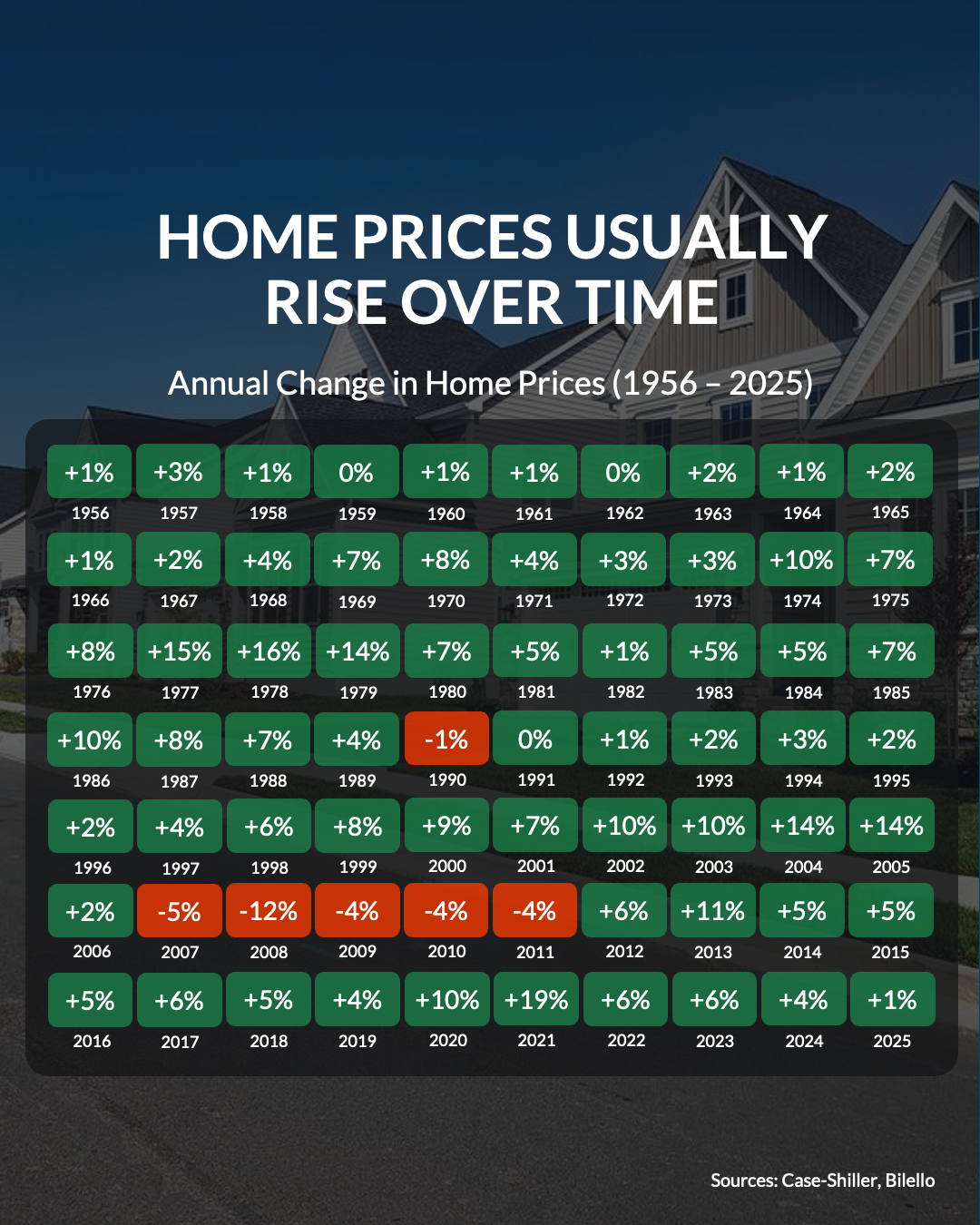
Waiting for a massive drop in home prices is a gamble that historical data does not support. Home values have a long track record of appreciating over time. Rather than trying to time a volatile market, the best strategy is to purchase a home when your personal finances are ready, your employment is stable, and the monthly payment fits comfortably into your budget.

Steven DeGreeff
Owner / Realtor® | Degreeff and Associates | Steven DeGreeff | Keller Williams Realty Integrity NW
or another way